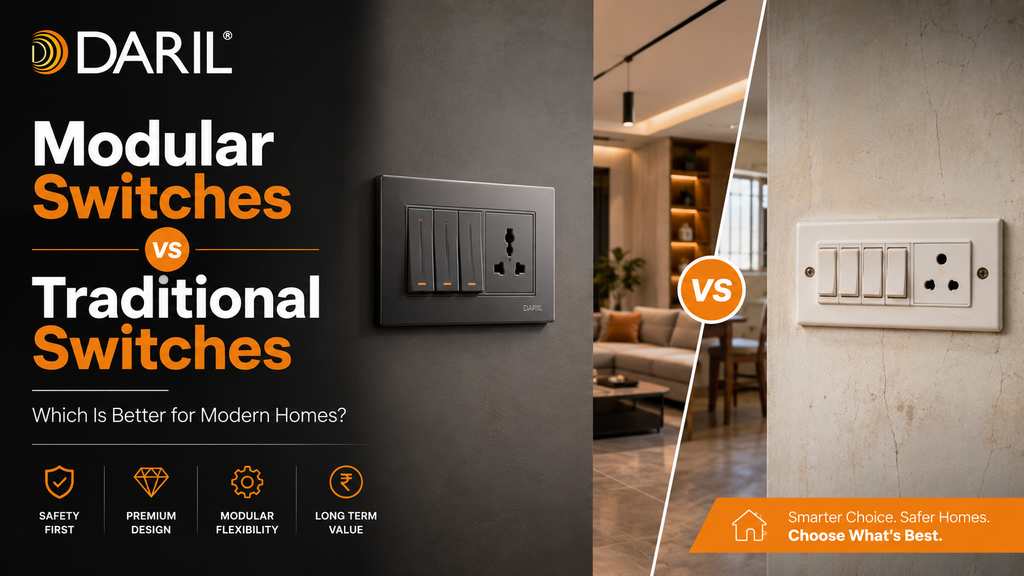
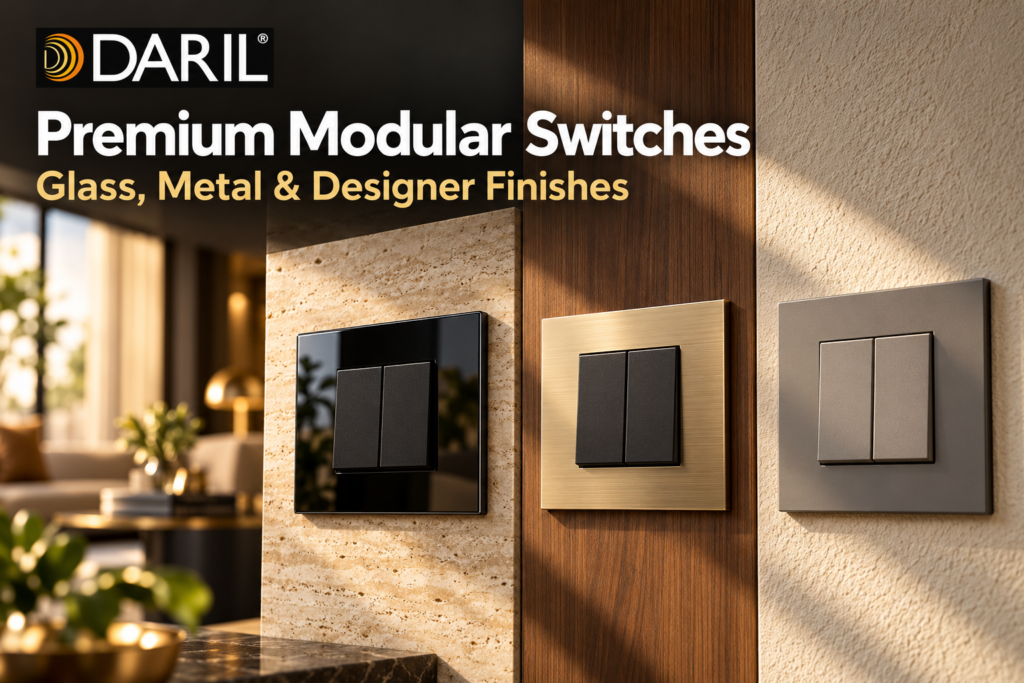
Choose premium modular switches by checking the finish, control type, electrical rating, and fit together. Glass can create a polished look. Brushed metal can complement hardware. Matte and textured plates can blend into a wall. None of these finishes alone proves that a switch is safer, smarter, or longer-lasting.
For a modern home, the best choice is a switchboard that looks right and feels easy to use every day. Check the rocker action, socket layout, replacement parts, and wiring needs before paying extra for appearance.
When visiting a branded switch dealer in Vadodara, bring paint samples, hardware photos, and your electrical plan. Compare complete boards instead of judging one small finish sample.
Current product ranges offer more than plain white plates. Schneider Electric lists wood, metal, and glass cover frames in its Unica Pure range. Legrand’s Arteor Advance includes matte colors, brushed stainless steel, and solid aluminum options.
This guide explains those choices and helps you decide where a premium finish adds real value.
What Makes a Modular Switch Different?
A modular switchboard uses separate parts within a compatible system. These may include switches, sockets, fan controls, dimmers, charging ports, support frames, and cover plates.
The decorative plate is the visible surround. The switch mechanism handles the electrical function. The mounting box sits behind the board.
This distinction matters when comparing prices. A quote for a glass plate may exclude the switches, frame, sockets, and installation.
“Modular” also does not mean every brand fits every other brand. Sizes, clips, supports, and mounting details can differ, even between ranges from one manufacturer.
Start by exploring electrical switches and controls, then confirm the exact series and compatible parts.
Which Premium Switch Trends Deserve a Closer Look?
These are design directions visible in current product ranges, rather than a ranking based on market share.
Why choose glass plates?
Glass surrounds suit interiors with clean lines, polished surfaces, and restrained detail. Black glass can create contrast on a pale wall. White glass can produce a softer effect.
A glass plate can surround ordinary mechanical switches. It does not automatically provide touch control.
Ask what material the product actually uses. Legrand’s Myrius catalog, for example, specifies 3 mm toughened glass for its glass plates. That is a product-specific detail, not a rule for all glass switchboards.
Check edge quality, reflections, and cleaning instructions. Toughened glass can still suffer damage, so avoid treating it as unbreakable.
Why consider metal and metallic finishes?
Brushed steel, aluminum, champagne, and similar tones can link switchboards with handles, lamps, and furniture details.
However, a metallic color does not always mean a solid metal plate. Some products use coated or decorated polymer. Others use real metal components.
Ask for the material specification and finish name. Two products described as “gold” may look quite different beside your door hardware.
Compare the surface in daylight and under your home’s lighting. Strong reflections can make a subtle finish appear much brighter.
What makes matte finishes useful?
Matte black, white, gray, and muted colors work well when you want less shine.
Legrand lists eight plate finishes and three mechanism shades for Arteor Advance. The range illustrates the scope for coordinating the plate and rocker without choosing glass.
Do not assume matte means fingerprint-proof. Dark surfaces may show dust or skin oils. Test a display sample with clean hands and inspect it from an angle.
Are slim rockers and textured plates worth considering?
Slim rockers and simpler edges can make a busy board feel less bulky. Textured, wood, or stone-look designs can soften an otherwise technical detail.
Confirm whether a texture comes from the material, a coating, or a printed effect. Look closely at corners and edges.
Try the rocker before buying. A neat profile has limited value if someone at home finds it hard to press or identify.
How Do Glass, Metal, and Designer Finishes Compare?
| Finish | Visual effect | Useful pairing | What to check |
| Glass | Reflective, crisp | Polished stone, simple walls | Actual glass specification and edge quality |
| Brushed metal | Restrained metallic detail | Metal handles and lighting | Real material versus metallic coating |
| Matte black | Strong contrast | Pale walls, dark hardware | Dust, fingerprints, and switch visibility |
| Matte white or gray | Quiet, simple | Neutral interiors | Cleaning guidance and shade consistency |
| Wood or wood-look | Warm, textured | Timber furniture and panels | Material, grain, and moisture suitability |
| Printed designer plate | Decorative detail | Selected feature areas | Pattern alignment and replacement availability |
No finish wins in every room. Choose a few samples and compare them against the actual wall.
How Should You Match Switches to Each Room?
What works in living and dining rooms?
Use one main finish to keep visible boards consistent. If your lights and handles have a warm metal tone, compare a similar plate without trying to match every surface exactly.
For example, brushed champagne may sit well beside warm wood. A white board may suit the same room if you want it to blend into the wall.
Coordinate the choice with your decorative lighting. View both under the light you will use at night.
What matters most in bedrooms?
Prioritize easy reach, clear controls, and comfortable rocker action. Try indicator lights in a dark room before choosing several illuminated modules.
A bedside board should make sense without close inspection. Separate reading lights and clearly placed controls may matter more than a striking finish.
What should you choose for kitchens and utility areas?
Favor surfaces you can maintain using the maker’s cleaning method. Check how exposed edges and textures collect residue.
Keep sockets and controls appropriately located away from water and heat. A glass surround does not make the whole board waterproof.
How should you handle shared and guest spaces?
Use simple layouts and controls that visitors can understand. Strong visual contrast may help users locate switches, but test the actual design.
Let older family members try a sample. Small icons and flat touch surfaces do not suit everyone equally well.
Are Touch and Smart Switches the Same Thing?
No. These terms describe different features.
- Mechanical switch: Uses a moving rocker or button.
- Touch switch: Responds to touch on a sensing surface.
- Smart switch: Supports connected control through a compatible system.
- Scene controller: Sends commands for a group of settings or devices.
A touch switch may work without an app. A smart switch may still use a physical rocker. A scene button may control several lights without acting like a basic on-off switch.
What should you test before choosing smart controls?
Ask for a demonstration using the functions you plan to use.
Check:
- Whether the device needs a neutral wire.
- Whether it requires a hub or gateway.
- Which functions work without internet.
- What happens after a power cut.
- Whether family members can use physical controls.
- Whether the connected lights and fans are compatible.
Do not assume a premium plate includes any connected function. Confirm product codes and system requirements.
For dimming, match the dimmer with the LED lamp or driver. A regular on-off switch does not dim a light, and a light dimmer should not replace a fan regulator.
What Safety Checks Matter More Than the Finish?
Buy the right device for the electrical job. A high-end surface cannot make up for an unsuitable rating or poor installation.
The Bureau of Indian Standards publishes a product manual for household switches under IS 3854:2023. Confirm applicable certification and markings for the exact product, rather than accepting a broad “premium quality” claim.
Where a product carries an ISI mark, use the BIS Care app’s license verification facility to check its authenticity.
Ask a qualified electrician to confirm:
- The switch and socket ratings needed for each circuit.
- Compatibility with the appliance or lighting load.
- Suitable wiring, terminals, and mounting boxes.
- Earthing and protection requirements.
- Location-specific protection near moisture or outdoors.
An ordinary decorative switch is not automatically suitable as an appliance isolator. Let the electrician specify the device.
If a board becomes hot, smells burnt, sparks unusually, or works intermittently, stop using the affected circuit and arrange professional inspection. Replacing its cover will not fix the underlying fault.
Can You Upgrade Existing Boards Without Major Wall Work?
Sometimes, but check the installation first.
The electrician should inspect the existing box, mounting points, depth, wiring condition, and available space. A new board with the same number of visible switches may still need a different frame.
Smart modules, USB chargers, and dimmers can need more depth than basic switches. Check before buying a full set.
For a Vadodara apartment renovation, ask for a trial installation on one board. This can reveal fit issues before you order for the whole home.
Keep a record of the selected series, plate sizes, finishes, and module codes. It will help when you need a replacement later.
How Can You Set a Sensible Budget?
Compare complete boards with the same functions. Include the plate, support frame, mechanisms, sockets, accessories, and installation.
For example, imagine a decorative finish adds ₹500 to each complete board. Across 20 boards, the extra cost would be ₹10,000. These are sample figures, not current retail prices.
That calculation helps you decide where appearance matters most. You might choose feature plates in the living room and a simpler compatible finish in service areas.
Ask whether the quoted price includes taxes and all required parts. Check the cost of a replacement plate or mechanism too.
Avoid choosing a range solely because its smallest board looks affordable. Larger boards and specialist modules may change the project total.
What Should You Ask About Long-Term Support?
Before buying, ask who handles a fault and how you would get a replacement. A long warranty means less if the process is unclear.
Check whether coverage differs for mechanical modules, electronic controls, chargers, and decorative plates. Ask about labor and service visits as well as parts.
For connected products, find out how updates work and which controls remain usable if an app or cloud service changes.
Choose a system you can maintain. Keep the model details with your home records so a future electrician can identify the correct parts without guesswork.
How Should You Care for Premium Switch Plates?
Follow the manufacturer’s cleaning instructions for the exact finish.
Use a soft cloth and avoid spraying liquid into the board. Do not use abrasive pads or assume strong cleaners are safe for coatings, prints, or metal surfaces.
Never remove a wired assembly for cleaning yourself. Ask an electrician to isolate and inspect it when needed.
Keep spare finish details and invoices. If the range offers replaceable plates, confirm that suitable replacements remain available.
A careful installation helps appearance too. Uneven wall surfaces, damaged edges, and poorly aligned frames can spoil even an expensive finish.
What Should You Take to the Showroom?
Bring wall samples, room photos, the electrical layout, and a list of appliances and controls.
Ask to see a complete working board. Try the switches several times and insert a suitable plug into a demonstration socket.
Check the finish beside both warm and neutral lighting. Phone photos alone may misrepresent the shade.
Request a written room-wise quotation and warranty terms. Use the contact page to confirm display samples and availability before visiting.
Frequently Asked Questions
Are glass modular switches better than plastic switches?
Glass can provide a different appearance and feel, but it does not automatically improve electrical performance. The mechanism, rating, certification, and installation still matter. Compare complete products rather than judging the surround alone.
Are metal switch plates safe for home use?
Purpose-designed metal plates can form part of a suitable switch system. Use the manufacturer’s compatible parts and have an electrician confirm installation and any earthing needs. A metal finish alone does not prove safety or quality.
Do all glass switches have touch control?
No. Glass plates can surround mechanical rockers. Touch control needs a suitable sensing mechanism, while smart control needs compatible connected hardware. Ask the seller to demonstrate the exact product you plan to buy.
Can I replace only the switchboard cover plate?
Sometimes. The replacement must match the existing range, support frame, and module layout. Similar outside dimensions do not guarantee compatibility. Have the product identified before ordering a plate.
Can smart switches control any LED light or ceiling fan?
No. Compatibility depends on the switch, connected load, driver, and fan design. Dimming and speed control need particular care. Check the manufacturer’s supported loads and have an electrician confirm the combination.
Should I use the same switch finish throughout the house?
You can, but you do not have to. Consistency works well within a room or connected area. Different finishes can suit bedrooms and service spaces. Keep the control layout clear and avoid mixing incompatible components.
Conclusion: Choose the Finish and Function Together
Glass, brushed metal, matte colors, and designer textures give modern homes more choice. Start with the right electrical function, then compare appearance, touch, care, and replacement options. A sample board in your own space can prevent an expensive mismatch.
Bring your finish samples and electrical plan to Daril Lighting Solutions. Ask to compare compatible ranges, test the controls, and review a complete quotation with your electrician before making the final choice.