
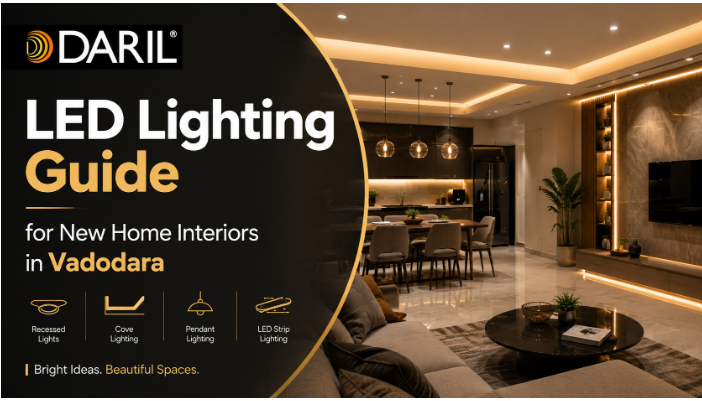
The best LED lighting plan for a new home in Vadodara should include a mix of ambient, task, and accent lighting. Ambient lights brighten the full room, task lights support activities like cooking or reading, and accent lights highlight décor, walls, ceilings or furniture. When planned well, LED lighting can make a new home look modern, comfortable and practical from day one.
Many homeowners search for LED light dealers Vadodara when they are building or renovating a home because they need guidance on fixture types, brightness, colour temperature, warranty and installation. Choosing the best LED lights in Vadodara is not only about buying attractive lights. It is about selecting the right light for each room, matching it to the interior theme, and ensuring the lighting supports daily use.
LED lighting is now widely preferred for its energy efficiency and long lifespan. The U.S. Department of Energy states that residential LEDs, especially ENERGY STAR-rated products, use at least 75% less energy and last up to 25 times longer than incandescent lighting. In India, the Bureau of Energy Efficiency also promotes energy efficiency through its standards and labelling programs, including LED lamp labelling.
For new home interiors, LED lighting should be planned before the false ceiling, wiring, furniture placement and wall panel work are finalized. This guide explains how to choose LED lights room by room, understand colour temperature, avoid common mistakes, and select reliable LED lighting options for your home.
Why Is LED Lighting Important for New Home Interiors?
LED lighting is important because it affects comfort, energy use, safety and interior appearance. A beautiful home can look dull if the lighting is too harsh, too dim or badly placed.
Good LED lighting helps you:
| Purpose | How LED Lighting Helps |
| Comfort | Creates the right mood for each room |
| Function | Supports cooking, reading, dressing and working |
| Energy efficiency | Uses less power than older lighting options |
| Interior design | Highlights ceilings, walls, furniture and décor |
| Safety | Improves visibility in stairs, passages and entrances |
| Flexibility | Offers options like dimming, profile lights and smart controls |
LED lights also help homeowners avoid the old habit of choosing lights only by wattage. For LED lighting, lumens are more useful because they indicate brightness, whereas watts indicate energy use. The U.S. Department of Energy explains that wattage measures electrical power, while lumens measure light output.
What Are the Main Types of LED Lights for Home Interiors?
New homes usually need several types of LED lights. Each type serves a different purpose.
| LED Light Type | Best Use |
| LED panel lights | General room lighting |
| LED downlights | False ceilings and focused ceiling lighting |
| LED spotlights | Artwork, wall panels and display areas |
| LED strip lights | Cove lighting, TV units and wardrobes |
| LED profile lights | Modern linear lighting for ceilings and walls |
| Pendant LED lights | Dining tables, kitchen islands and corners |
| LED wall lights | Bedrooms, passages and decorative walls |
| LED mirror lights | Bathrooms and dressing areas |
| LED track lights | Flexible lighting for display walls and workspaces |
For new interiors, it is better to combine these lights rather than use a single central light. This makes the space more balanced and premium.
How Should You Plan LED Lighting Room by Room?
A room-wise lighting plan helps avoid confusion and overbuying. Every room has a different purpose, so the type and brightness of the light should also vary.
Living Room LED Lighting
The living room needs layered lighting because it is used for guests, family time, TV viewing and casual conversations.
Good LED lighting ideas for living rooms include:
- LED downlights for general brightness
- Cove lighting for soft evening ambience
- Wall lights near textured walls or artwork
- Spotlights for TV units or display shelves
- Floor lamps for reading corners
- Profile lights for a clean, modern ceiling look
For living rooms, warm white or soft white lighting often works well, creating a welcoming mood. Lighting colour temperature affects how a room feels, and lower-Kelvin lights can create a warmer, more relaxed atmosphere.
Bedroom LED Lighting
Bedrooms need soft and relaxing lighting. Avoid very bright white lights near the bed because they can feel harsh at night.
Use these options:
- Warm LED downlights
- Bedside wall lights
- LED profile lighting behind the headboard
- Wardrobe sensor lights
- Dimmable ceiling lights
- Reading lights near the bed
A practical setup is to use warm lights for the bed area and brighter neutral lights near the wardrobe or dressing mirror. This gives comfort and function in the same room.
Kitchen LED Lighting
Kitchens need clear visibility. Here, lighting must support cooking, cleaning and food preparation.
Best LED lights for kitchens include:
- Panel lights for general brightness
- Under-cabinet LED strips for countertops
- Pendant lights over breakfast counters
- Neutral white downlights
- Focused lights near the sink and cooking area
Neutral white light works well in kitchens because it gives better visibility than warm decorative lighting. Mid-range colour temperatures around 3500K to 4000K are commonly used for task areas such as kitchens and bathrooms.
Dining Area LED Lighting
Dining areas need warm, focused lighting. Pendant lights are a popular choice because they bring attention to the dining table.
| Dining Table Type | Suggested LED Lighting |
| 4-seater | One medium pendant |
| 6-seater | Two pendants or one linear light |
| 8-seater | Three pendants or a long designer fixture |
| Round table | Circular pendant or dome light |
Keep pendant lights at a comfortable height. They should brighten the table without blocking the view across the dining space.
Bathroom LED Lighting
Bathroom lighting should be safe, clear and glare-free. Mirror lighting is especially important because people use bathrooms for grooming, shaving and skincare.
Good options include:
- LED mirror lights
- Ceiling downlights
- Wall lights near vanity areas
- Waterproof-rated lights for wet zones
- Motion sensor lights for convenience
Always check if a light is suitable for bathroom use. Moisture can damage poor-quality fixtures.
Balcony and Entrance LED Lighting
Balconies and entrances need lighting that is both decorative and safe.
Useful options include:
- Outdoor wall lights
- LED step lights
- Warm balcony string lights
- Gate or entrance lights
- Garden spotlights
- Motion sensor lights
For outdoor areas, choose fixtures designed for exterior use. Outdoor lights should be resistant to dust, moisture and weather exposure.
Which LED Colour Temperature Is Best for Each Room?
Colour temperature means how warm or cool the light appears. It is measured in Kelvin.
| Colour Temperature | Appearance | Best Use |
| 2700K to 3000K | Warm white | Bedrooms, living rooms, dining areas |
| 3500K to 4000K | Neutral white | Kitchens, bathrooms, dressing areas |
| 4000K to 5000K | Cool white | Study rooms, workspaces, utility areas |
| 5000K to 6500K | Daylight | Garages, task-heavy zones, and commercial areas |
For home interiors, avoid mixing too many colour temperatures within a single open space. For example, if the living and dining areas are connected, use a similar warm tone in both areas for a smooth look.
How Many Lights Do You Need in a New Home?
The number of lights depends on room size, ceiling height, wall colour, furniture layout and the purpose of the room.
A simple planning method is:
- Decide the main use of the room.
- Select the colour temperature.
- Add ambient lighting first.
- Add task lighting where needed.
- Add accent lighting for design features.
- Check switch placement and dimmer options.
- Finalize wiring before false ceiling work.
Do not blindly copy another home’s lighting plan. A 2BHK flat, a duplex, a bungalow and a commercial-style apartment will all need different layouts.
LED Lighting Plan for a Typical New Home
| Area | Recommended LED Lighting |
| Living room | Downlights, cove lights, wall lights, spotlights |
| Bedroom | Warm downlights, bedside lights, wardrobe lights |
| Kitchen | Panel lights, under-cabinet lights, neutral white LEDs |
| Dining area | Pendant lights, warm ceiling lights |
| Bathroom | Mirror lights, ceiling lights, moisture-safe fixtures |
| Passage | Slim downlights, sensor lights, wall lights |
| Balcony | Outdoor wall lights, string lights, step lights |
| Study room | Task light, ceiling light, neutral or cool white LEDs |
| Entrance | Wall lights, ceiling lights, nameplate lighting |
This plan gives a good starting point, but the final choice should depend on your interior design and electrical layout.
What Should You Check Before Buying LED Lights?
Before buying LED lights for a new home, look beyond appearance. A good-looking fixture may not perform well if the driver, chip, heat management or warranty is poor.
Check Brightness in Lumens
Do not judge LED brightness only by watts. Lumens show how bright the light is. A low-wattage LED can still deliver high brightness if it is efficient.
Check Colour Temperature
Select warm, neutral or cool light based on the room. Warm light suits relaxation areas. Neutral light suits practical zones.
Check CRI
CRI means Colour Rendering Index. It shows how accurately a light displays colours. A higher CRI is useful in dressing areas, kitchens, showrooms and spaces with artwork.
Check Warranty
Ask about the warranty for the fixture, driver and LED chip. Also, ask whether replacement parts are available.
Check Heat Management
Good LED lights should manage heat properly. Poor heat control can reduce product life.
Check Installation Needs
Some LED lights require a false ceiling depth, profile channels, drivers, or special wiring. Confirm this before the civil and ceiling work is complete.
Check Energy Label
In India, BEE star labelling helps consumers identify energy-efficient products in applicable categories. BEE’s standards and labelling program is designed to support energy efficiency and informed product choice.
What Are Common LED Lighting Mistakes in New Homes?
Many homeowners make lighting decisions at the last stage. This often leads to poor placement, extra cost or an uneven look.
Avoid these mistakes:
- Using only one ceiling light in each room
- Choosing lights without checking lumens
- Mixing warm and cool lights randomly
- Ignoring under-cabinet lighting in kitchens
- Placing too many downlights in small rooms
- Forgetting dimmers in bedrooms and living rooms
- Buying lights before checking the ceiling depth
- Using indoor lights in outdoor areas
- Ignoring driver quality and warranty
- Not planning switches and controls properly
Good lighting starts during the interior planning stage, not after painting and furniture installation.
LED Lighting for Small Apartments in Vadodara
Small apartments need smart lighting because every corner matters. The goal is to make rooms feel brighter without making the ceiling look crowded.
Use these ideas:
- Choose slim downlights instead of bulky fixtures
- Use cove lighting to make ceilings feel wider
- Add mirrors with LED lights to increase brightness
- Use wall lights to save floor space
- Keep colour temperature consistent
- Use profile lighting for a clean, modern look
- Avoid oversized chandeliers in compact rooms
A small living room can look bigger when dark corners are removed and light spreads evenly.
LED Lighting for Premium Villas and Bungalows
Villas and bungalows often have larger rooms, higher ceilings and more design zones. These homes can use more layered lighting.
Useful ideas include:
- Large statement LED chandeliers
- Linear profile lighting in passages
- Outdoor landscape lighting
- Warm step lights on staircases
- Cove lighting in double-height areas
- Pendant lights in dining and foyer spaces
- Accent lights for artwork and wall textures
For larger homes, lighting should be planned early with the interior designer and electrician. This helps avoid exposed wires, wrong fixture sizes and uneven brightness.
Why Buy from a Local LED Lighting Showroom?
Buying from a local showroom helps you see the actual brightness, finish and build quality before making a decision. Online product images may not show the real size, colour tone or light spread.
A showroom visit helps you compare:
- Warm, neutral and cool light tones
- Fixture size and finish
- Downlight beam spread
- Pendant and chandelier scale
- LED strip brightness
- Profile light quality
- Warranty and installation requirements
- Options for custom lighting
This is especially helpful for new homes because one wrong choice can affect the full interior look.
LED Lighting Buying Checklist
| Checklist Point | Why It Matters |
| Room-wise lighting plan | Prevents random purchases |
| Correct colour temperature | Improves comfort and appearance |
| Lumens checked | Helps select the proper brightness |
| Warranty confirmed | Protects your investment |
| Driver quality checked | Supports long-term performance |
| Ceiling depth confirmed | Avoids installation issues |
| Outdoor rating checked | Improves safety in exterior areas |
| Switch plan finalized | Improves daily convenience |
| Dimmer options considered | Adds flexibility |
| Showroom comparison done | Helps choose confidently |
FAQs About LED Lighting for New Homes
Which LED light is best for home interiors?
Warm white LED lights are best for bedrooms, living rooms and dining areas. Neutral white LEDs work better for kitchens, bathrooms and dressing areas. The best choice depends on room purpose, brightness needs and interior style.
How do I choose LED lights for a new home?
Start with a room-wise plan. Decide where you need general, task, and accent lighting. Then choose the right lumens, colour temperature, fixture type and switch controls before final wiring.
Is warm white or cool white better for the home?
Warm white is better for relaxing areas like bedrooms and living rooms. Cool white or neutral white is better for task areas such as kitchens, study rooms, and utility spaces.
Are LED lights good for false ceilings?
Yes, LED downlights, strip lights and profile lights work very well in false ceilings. They create a clean look and allow layered lighting. Always check ceiling depth and installation requirements before buying.
Do LED lights reduce electricity bills?
LED lights generally use much less electricity than incandescent lights. The U.S. Department of Energy states that residential LEDs use at least 75% less energy than incandescent lighting. Actual savings depend on usage hours, product quality and total number of lights.
Should I buy LED lights online or from a showroom?
Online buying can work for simple bulbs, but a showroom is better for new home interiors. You can check brightness, size, finish, colour temperature and warranty before buying.
Conclusion
LED lighting is one of the most important parts of new home interiors. It affects how your home looks, how comfortable each room feels and how practical your daily routine becomes. A good plan uses the right mix of ceiling, profile, wall, pendant, mirror, and outdoor lights. Before buying, check lumens, colour temperature, warranty, installation needs and product quality. For homeowners in Vadodara seeking practical guidance and reliable lighting options, Daril Lighting Solutions can help you explore suitable LED lighting choices for modern home interiors.