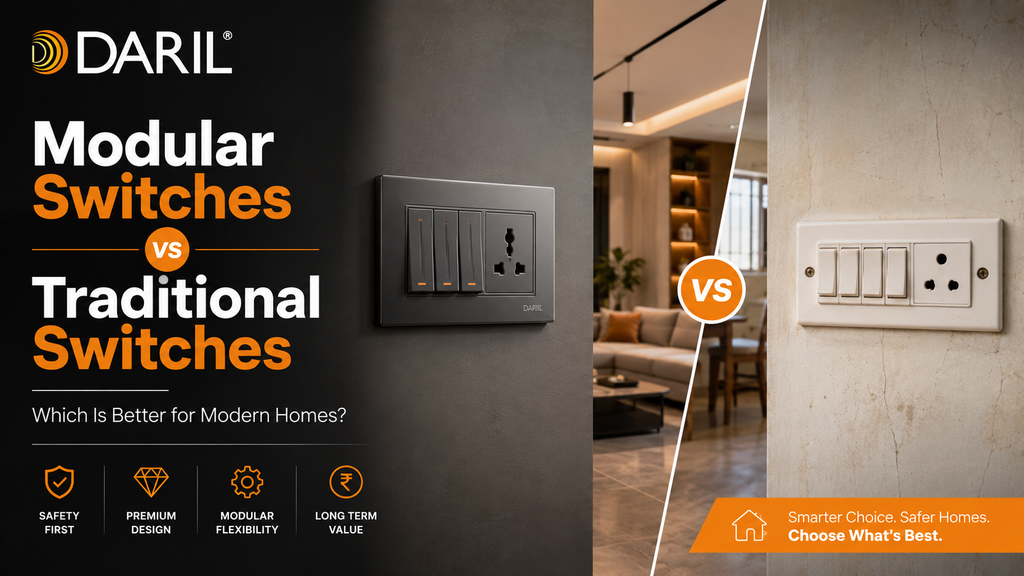
Choosing between modular switches and traditional switches is not only about looks. The better option depends on safety, wiring condition, load requirements, maintenance, budget, and how you want the switchboard to fit your interiors.
For most new homes and major renovations, modular switches are usually the more practical choice. They offer cleaner layouts, flexible combinations, easier component replacement, and more options for sockets, fan regulators, dimmers, indicators, USB points, and selected smart controls. Traditional switches can still work well in simple installations where the wiring is sound, the product quality is good, and design flexibility is not important.
If you are comparing products through a switches dealer in Vadodara, do not choose a switch only because the plate looks premium. Ask about the switch rating, applicable standards, material quality, socket safety, compatibility with the existing box, and the electrical load it will control.
In India, the Bureau of Indian Standards lists IS 3854:2023, Switches for Domestic and Similar Purposes, Third Revision. BIS testing information for this standard covers ratings, marking, prevention of access to live parts, earthing, terminals, and construction. This makes one point clear: “modular” is a design format, not a guarantee of quality or safety. Product compliance, correct selection, and proper installation still matter.
What Are Modular Switches?
Modular switches are separate electrical control modules fitted into a compatible grid, support frame, and cover plate. A board can combine different modules into a single organised layout. Depending on the range, the same plate may hold light switches, sockets, fan regulators, dimmers, data points, bell switches, USB charging modules, or other accessories.
Their main advantage is flexibility. If a compatible module fails, an electrician may be able to replace it rather than replace the entire board. The exact process depends on the brand, series, mounting system, wiring, and condition of the installation.
What Are Traditional Switches?
Traditional or non-modular switches usually use a more fixed switchboard arrangement. Older installations may have individual switches and sockets mounted on a board with fewer options for rearranging the layout or changing the faceplate.
Problems often appear when older boards become loose, cracked, discoloured, or difficult to match with replacement parts. The issue is not always the traditional format itself. Age, wear, weak connections, poor products, and outdated wiring can be more important.
Modular Switches vs Traditional Switches: Quick Comparison
| Factor | Modular Switches | Traditional Switches |
| Design | Clean, coordinated plates and finishes | Usually basic and fixed |
| Customisation | High with compatible modules | Limited in many older systems |
| Replacement | Individual modules can often be changed | May need more board-level work |
| Interior matching | Wide choice of plate styles | Fewer design options |
| Smart-ready options | Available in selected ranges | Usually limited |
| Upfront cost | Often higher | Often lower for basic products |
| Best suited for | New homes and renovations | Simple, budget-focused installations |
| Safety | Depends on rating, compliance and installation | Depends on rating, compliance and installation |
Why Are Modular Switches Popular in Modern Homes?
Cleaner Interior Finish
Switchboards are visible in almost every room. Modular systems allow several functions to sit within a single coordinated frame, helping the board look planned rather than like something added later.
This is useful in living rooms, bedrooms, kitchens, and spaces with designer lighting. Reviewing electrical switches and modular switch options alongside fixtures can help you coordinate controls with the room design.
Better Layout Flexibility
Modern homes often need more than basic on-and-off controls. A bedside panel may need light controls, charging sockets, fan regulation, and two-way switching.
A modular system makes these combinations easier to organise, provided all components are compatible with the chosen range.
Easier Maintenance
When one module fails, a compatible replacement may be easier to fit than rebuilding the whole board. However, modular parts are not universally interchangeable. A switch from one series may not fit another manufacturer’s grid or plate.
Before buying replacements, confirm the exact brand, series, module size, and plate system.
Better Renovation Planning
Renovation is the right time to review switch positions, socket quantity, appliance points, fan regulators, lighting circuits, and bedside controls.
If you are also updating the lighting, this LED lighting guide for new home interiors can help you plan lighting zones before finalising switchboards.
Are Modular Switches Safer Than Traditional Switches?
Not automatically.
Safety depends on the product, rating, wiring condition, terminal quality, earthing where required, circuit protection, installation workmanship, and actual use. BIS identifies IS 3854:2023 as the current Indian Standard for switches for domestic and similar purposes, with listed test areas that include access to live parts, earthing, terminals, and construction.
The wider safety context is serious. The Central Electricity Authority’s 2024-25 state-wise dataset records 14,430 electrical accidents across the categories it tracks, including 6,342 human fatalities. This is system-wide electrical accident data and is not specific to wall switches. It should not be used to claim that one type of switch caused or could prevent those incidents. It does show why electrical products and installation quality deserve careful attention.
For homeowners, the safer approach is to use correctly rated products, verify relevant certifications or markings where applicable, and hire a qualified electrical professional for installation. BIS says consumers can use the BIS Care app to verify licence details and find information about Indian Standards.
What Should You Check Before Buying Switches?
Use this practical checklist:
- Load requirements: Lighting, fans, kitchen appliances, geysers, and other circuits may have different control needs.
- Product rating: Match the switch and socket to the circuit and appliance requirements.
- Applicable standard or certification: Verify product markings and claims rather than relying only on packaging.
- Plate and grid compatibility: Confirm that switches, sockets, regulators, and plates are part of the same compatible series.
- Build quality: The switch should operate smoothly, fit firmly, and not feel loose.
- Future availability: Prefer a range with matching replacement modules and plates.
- Installation quality: Loose terminals, damaged wires, and incorrect circuit design can create problems even with a good switch.
If a switch is sparking, unusually warm, cracked, loose, making abnormal sounds, or showing burn marks, have the circuit checked by a qualified electrician.
Which Switch Type Works Best in Different Rooms?
Living Room
Modular switches are often useful in living rooms, which can have several lighting zones, decorative fixtures, fans, and charging points. For layered lighting, explore these decorative lighting ideas for Vadodara homes before deciding where separate controls or dimmers may be useful.
Bedroom
Modular layouts work well for bedside controls, two-way switching, charging sockets, fan regulators, and reading lights. Good placement matters as much as the plate design.
Kitchen
Prioritise correct appliance circuits, suitable sockets, safe placement, and easy access. Kitchens may have several high-use appliances, so circuit planning should be handled professionally.
Bathroom and Utility Areas
Moisture changes the risk profile. Switch and socket placement must suit the location and applicable safety requirements. Do not assume a normal indoor switch is suitable simply because it is modular.
Home Office
Modular systems are convenient when you need power sockets, data points, charging modules, and lighting controls within a compact board.
Are Traditional Switches Still Worth Buying?
Yes, in the right situation.
Traditional switches can make sense when the requirement is basic, the existing board is in good condition, compatible quality products are available, and you want a simple, economical repair.
You do not need to replace every working switch just to make a home look modern. If the wiring, board, and switches are safe and functional, an electrician may advise keeping them. Upgrading makes more sense during renovation, rewiring, layout changes, or when old parts are damaged or difficult to replace.
Do Modular Switches Cost More?
They often have a higher initial cost than basic traditional switches, but the final budget depends on the brand, series, finish, module count, sockets, regulators, dimmers, smart controls, and installation work.
Compare the complete switchboard cost, not only the price of one switch. A premium plate, support frame, multiple modules, and accessories can significantly affect the total.
For a fair comparison, ask for a room-wise or board-wise estimate with quantities.
When Should You Upgrade to Modular Switches?
An upgrade is worth considering when you are rewiring or renovating, existing switches are damaged or unreliable, you need more sockets or better control positions, old replacement parts are difficult to find, or you want a coordinated switch system with features such as dimmers, regulators, data points, or selected smart controls.
If only one switch has failed, do not assume the whole house needs replacement. Ask an electrician to inspect the fault and nearby wiring first.
Frequently Asked Questions
1. What is the main difference between modular and non-modular switches?
Modular switches use separate compatible modules fitted into a grid and cover plate. This makes it easier to combine controls and replace individual components. Traditional switches generally use a more fixed board arrangement.
2. Which switch is best for a modern home?
For most new homes, modular switches are more flexible because they support clean layouts, multiple functions, and coordinated finishes. The best choice still depends on product quality, rating, wiring design, budget, and installation.
3. Are modular switches more expensive than traditional switches?
Often, yes. The system may include modules, support frames, cover plates, sockets, regulators, and premium finishes. Compare the total board cost rather than just the switch price.
4. Can I replace traditional switches with modular switches without changing wiring?
Sometimes, but not always. The existing box size, depth, wiring condition, number of points, and new grid must be checked. A qualified electrician should inspect the installation before confirming the work required.
5. How do I know whether an electrical switch is good quality?
Check the rating, manufacturer information, applicable standard or certification claims, terminal design, build quality, and circuit compatibility. Where a BIS Standard Mark or licence is claimed, BIS provides tools such as BIS Care to verify licence details.
6. Are smart switches the same as modular switches?
No. “Modular” describes the physical switch system and layout. “Smart” refers to features such as apps, automation, touch, or voice control. A modular range can be manual or smart.
Conclusion: Which One Should You Choose?
For most modern Indian homes, modular switches are the better all-round option because they offer flexible layouts, cleaner design, easier product coordination, and more room for future changes. Traditional switches can still be practical for simple, budget-conscious installations where the existing electrical system is safe and suitable.
Start with electrical requirements, not the faceplate. Check the circuit load, product rating, applicable standards, compatibility, and installation quality. When in doubt, have the switchboard and wiring reviewed by a qualified electrical professional.
If you are planning a new home or renovation in Vadodara, compare switch designs in person, confirm the technical requirements, and choose a range you can maintain over time. For guidance on modular switches, sockets, regulators, dimmers, and related electrical products, visit Daril Lighting Solutions, which aims to balance function, safety, budget, and interior design.