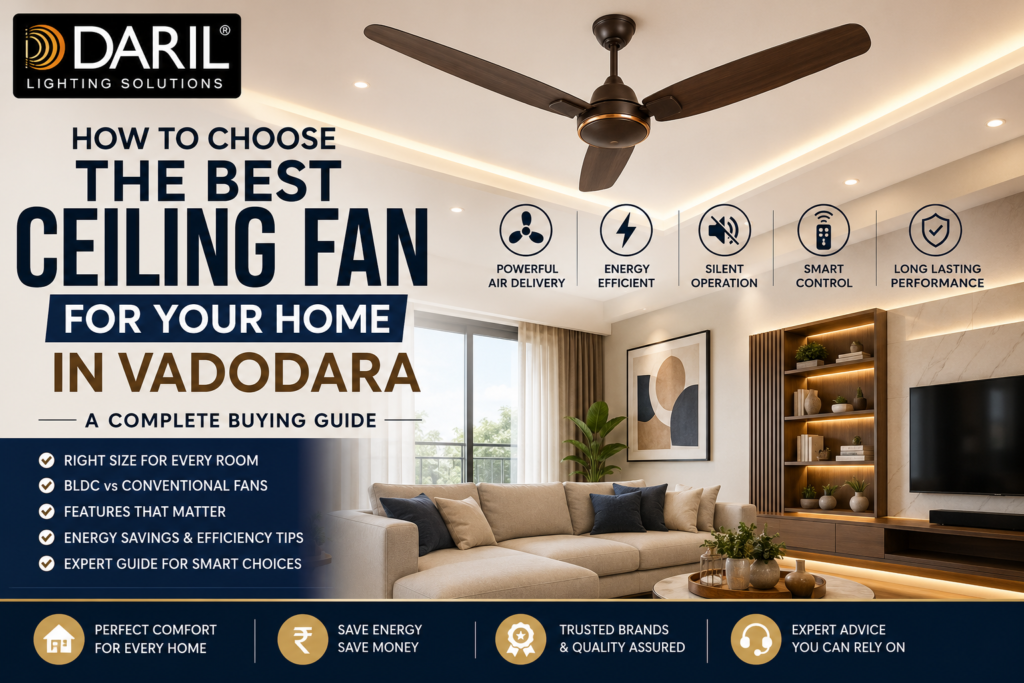
If you’re planning to buy a new ceiling fan, choosing the right model involves much more than selecting a design that matches your interiors. The best ceiling fan should provide effective air circulation, consume less electricity, operate quietly, and suit the size and purpose of your room. Whether you are furnishing a new home, renovating your existing property, or replacing an old fan, making an informed decision can improve both comfort and energy efficiency.
Today, many homeowners searching for a ceiling fan distributor in Vadodara are also comparing energy-efficient BLDC fans, smart ceiling fans with remote controls, decorative models, and high-speed options for different rooms. Modern ceiling fans are available in a wide range of blade sizes, finishes, motor technologies, and smart features, making it easier than ever to find a solution that fits your lifestyle.
The right ceiling fan can reduce electricity costs, improve airflow during hot summers, complement your interior design, and provide years of reliable performance. However, selecting the wrong fan may lead to poor air circulation, unnecessary energy consumption, or increased maintenance.
This guide explains everything you need to know before purchasing a ceiling fan, including the latest technologies, room-wise recommendations, energy-saving tips, and common buying mistakes.
Why Choosing the Right Ceiling Fan Matters
A ceiling fan is one of the most frequently used electrical appliances in Indian homes. It operates for several hours every day, especially during the summer season.
Choosing the right fan offers several advantages:
- Better air circulation throughout the room
- Lower electricity consumption
- Improved indoor comfort
- Reduced dependence on air conditioning
- Quiet operation
- Longer product life
- Attractive interior appearance
Instead of focusing only on price, homeowners should consider long-term value, efficiency, and reliability.
What Should You Consider Before Buying a Ceiling Fan?
Several factors affect how well a ceiling fan performs.
Before making a purchase, evaluate:
- Room size
- Ceiling height
- Blade span
- Motor technology
- Air delivery
- Energy efficiency
- Noise level
- Design
- Warranty
- After-sales support
Buying from a trusted ceiling fan dealer can also help you compare genuine brands and receive expert guidance based on your home’s requirements.
Types of Ceiling Fans
Different rooms require different types of fans. Understanding the available options makes it easier to select the right product.
Standard Ceiling Fans
These are the most common fans found in Indian homes.
Best for:
- Bedrooms
- Living rooms
- Dining rooms
- Guest rooms
Advantages:
- Affordable
- Easy to maintain
- Available in many designs
BLDC Ceiling Fans
BLDC stands for Brushless Direct Current motor technology.
Unlike conventional induction motors, BLDC fans consume significantly less electricity while maintaining strong airflow.
Benefits include:
- Lower electricity bills
- Silent operation
- Longer motor life
- Better efficiency
- Inverter compatibility
Many homeowners now choose BLDC fans because they combine performance with energy savings.
Decorative Ceiling Fans
Decorative fans enhance the overall appearance of modern interiors.
They are commonly installed in:
- Luxury apartments
- Villas
- Living rooms
- Dining spaces
- Hotel interiors
Available finishes include:
- Matte black
- Wood finish
- Metallic colours
- Premium textures
Decorative fans combine aesthetics with functionality.
Smart Ceiling Fans
Smart ceiling fans are becoming increasingly popular in modern homes.
They may include:
- Remote control
- Mobile app control
- Voice assistant compatibility
- Timer settings
- Sleep mode
- Multiple speed presets
These features provide greater convenience without changing the overall appearance of the room.
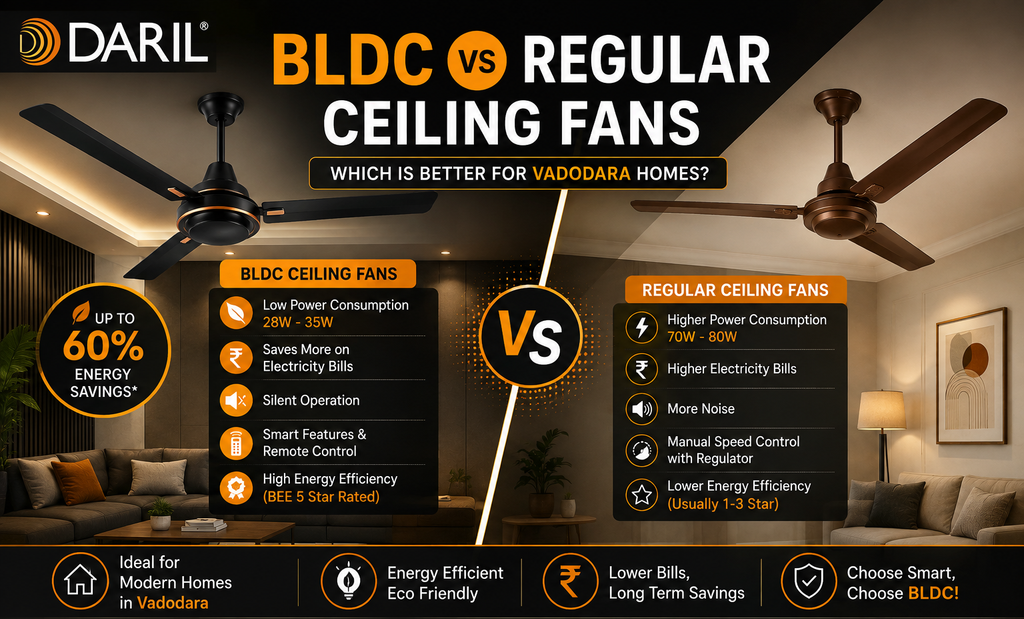
BLDC vs Conventional Ceiling Fans
One of the most common questions homeowners ask is whether a BLDC fan is worth the additional investment.
The table below compares both options.
| Feature | BLDC Fan | Conventional Fan |
| Electricity Consumption | Low | Higher |
| Motor Technology | Brushless DC | Induction Motor |
| Noise Level | Very Quiet | Moderate |
| Inverter Performance | Excellent | Average |
| Energy Savings | High | Standard |
| Initial Cost | Higher | Lower |
| Long-Term Savings | Better | Moderate |
Although BLDC fans usually cost more initially, many homeowners recover the difference through lower electricity bills over time.
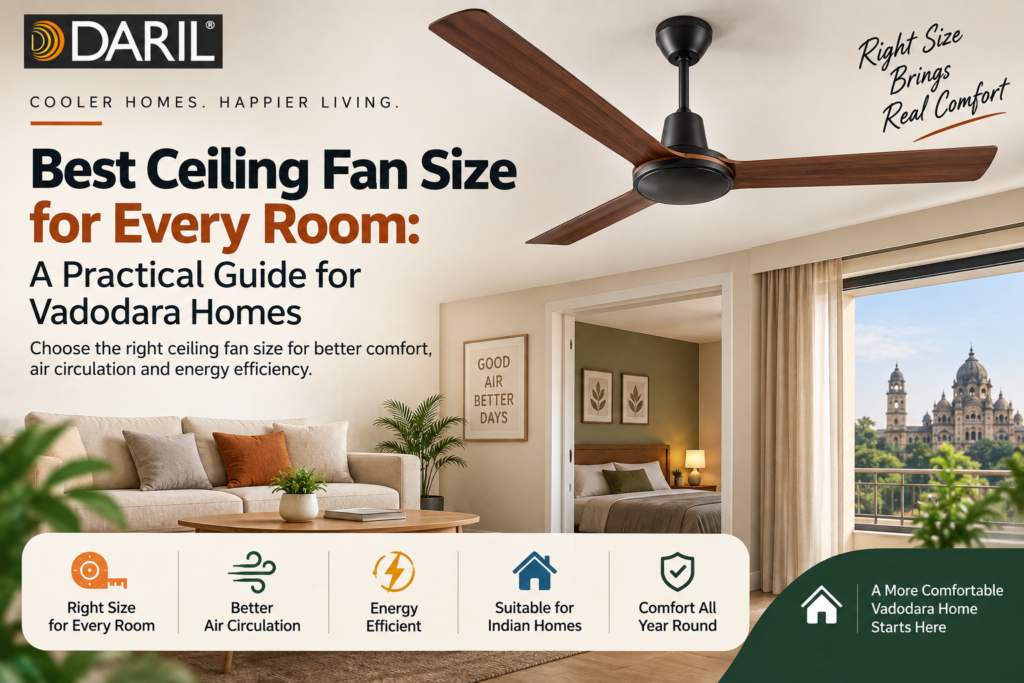
How to Choose the Right Ceiling Fan Size
Selecting the correct blade span is essential for proper airflow.
| Room Size | Recommended Blade Span |
| Up to 75 sq. ft. | 600–900 mm |
| 75–100 sq. ft. | 1050 mm |
| 100–150 sq. ft. | 1200 mm |
| Above 150 sq. ft. | 1400 mm or larger |
Installing an oversized or undersized fan may reduce air circulation and overall comfort.
Which Ceiling Fan Is Best for Each Room?
Different rooms have different airflow requirements.
Living Room
The living room usually accommodates more people and larger furniture.
Recommended features:
- Large blade span
- Decorative finish
- High air delivery
- Silent motor
A stylish ceiling fan can complement modern lighting and interior design.
Bedroom
Bedrooms require quiet operation and comfortable airflow.
Look for:
- BLDC technology
- Low noise
- Remote control
- Sleep mode
- Warm design finishes
Silent operation improves sleep quality.
Dining Room
Dining areas often benefit from decorative fans that blend with pendant lighting.
Choose:
- Elegant designs
- Medium blade span
- Quiet motor
- Balanced airflow
Kitchen
Kitchen fans should provide effective ventilation without occupying too much visual space.
Features to consider:
- Compact design
- Easy cleaning
- Moisture-resistant finish
Study Room
Good airflow improves comfort during work or study.
Choose fans that provide:
- Quiet performance
- Stable airflow
- Energy efficiency
This helps create a productive environment.
Important Ceiling Fan Features to Look For
Not every feature is necessary for every household.
However, these features can improve comfort and convenience.
High Air Delivery
Air delivery indicates how much air the fan circulates.
Higher air delivery generally means better cooling.
Silent Operation
Noise becomes more noticeable during sleeping or studying.
BLDC motors usually perform more quietly than conventional motors.
Remote Control
Remote-operated fans eliminate the need to reach wall switches every time you want to adjust speed.
This is particularly useful for bedrooms and elderly family members.
Energy Efficiency
Fans with energy-efficient motors reduce electricity usage throughout the year.
When paired with energy-efficient LED lighting solutions, homeowners can further improve household energy efficiency.
Premium Finish
Modern fans are available in finishes that complement contemporary interiors.
Popular choices include:
- Matte black
- White
- Wood finish
- Metallic bronze
- Brushed steel
A well-designed ceiling fan becomes part of the room’s décor rather than just an appliance.
Common Mistakes to Avoid When Buying a Ceiling Fan
Buying a ceiling fan is a long-term investment. While design and price often influence purchasing decisions, overlooking technical features can lead to poor performance and higher operating costs. Here are some common mistakes homeowners should avoid.
Choosing the Wrong Fan Size
Installing a small fan in a large room reduces airflow, while an oversized fan may create excessive air movement in compact spaces.
Always select the blade span according to your room dimensions for balanced air circulation.
Ignoring Energy Efficiency
A ceiling fan runs for several hours every day, especially during the summer months. Choosing an energy-efficient model can significantly reduce electricity consumption over time.
If you are replacing an old fan, consider upgrading to a BLDC ceiling fan that uses less power while maintaining high air delivery.
Buying Only Based on Appearance
Decorative fans can enhance your interiors, but appearance should never be the only deciding factor.
Also consider:
- Air delivery (CMM)
- Motor quality
- Power consumption
- Noise level
- Warranty
- Service availability
Ignoring Ceiling Height
Ceiling height directly affects fan performance.
General recommendations include:
| Ceiling Height | Recommended Installation |
| Up to 9 ft | Standard downrod |
| 9–11 ft | Medium downrod |
| Above 11 ft | Longer downrod for better airflow |
Installing the fan at the correct height ensures comfortable air circulation throughout the room.
Buying Without Checking Warranty
Always purchase fans from trusted manufacturers that provide a clear warranty and service support. Genuine products typically offer better reliability and easier access to replacement parts if needed.
How Much Electricity Can an Energy-Efficient Ceiling Fan Save?
One of the main reasons homeowners choose modern ceiling fans is lower electricity consumption.
Traditional induction motor fans generally consume between 70 and 80 watts, while many BLDC ceiling fans use approximately 28 to 35 watts, depending on the model and speed settings.
For households that operate ceiling fans for several hours each day, this difference can contribute to noticeable energy savings over time.
To improve overall home efficiency, many homeowners also combine ceiling fans with LED lighting solutions, creating a comfortable indoor environment while reducing overall electricity usage.
Are Smart Ceiling Fans Worth Buying?
Smart ceiling fans are becoming increasingly popular in modern homes because they offer greater convenience and control.
Common smart features include:
- Remote control operation
- Mobile app connectivity
- Voice assistant compatibility
- Timer settings
- Sleep mode
- Multiple speed levels
- Reverse mode on selected models
These features are particularly useful for:
- Elderly family members
- Children
- Bedrooms
- Living rooms
- Smart home automation
If you are already planning home automation, a smart ceiling fan can integrate easily with smart lighting and modular switches.
Ceiling Fan Maintenance Tips
Proper maintenance helps improve performance and extend the life of your ceiling fan.
Follow these simple practices:
- Clean blades regularly to prevent dust buildup.
- Tighten screws during routine maintenance.
- Check for unusual noise or vibration.
- Balance the blades if wobbling occurs.
- Avoid hanging decorative items from the fan.
- Schedule professional servicing if electrical issues arise.
Regular cleaning also improves airflow and keeps the fan looking new.
Ceiling Fan Buying Checklist
Use this checklist before making your purchase.
| Checklist | Yes / No |
| Correct blade size selected | ☐ |
| Suitable for room size | ☐ |
| Energy-efficient motor | ☐ |
| Quiet operation | ☐ |
| Good air delivery | ☐ |
| Warranty available | ☐ |
| Genuine brand | ☐ |
| After-sales service available | ☐ |
| Matches home interiors | ☐ |
| Fits your budget | ☐ |
Reviewing these points can help you choose a fan that provides long-term comfort and value.
Why Buy from a Trusted Ceiling Fan Dealer?
A reliable dealer offers more than just a wide selection of products. Professional guidance can help you compare fan sizes, motor technologies, energy efficiency, and design options based on your specific needs.
An experienced supplier can also recommend matching electrical switches and other home electrical products to ensure a coordinated and functional installation.
Frequently Asked Questions
Which ceiling fan is best for homes in Vadodara?
The best ceiling fan depends on your room size, ceiling height, energy-saving goals, and preferred features. Many homeowners choose BLDC fans because they provide excellent air delivery while using less electricity.
Is a BLDC ceiling fan better than a normal fan?
BLDC fans generally consume less electricity, operate more quietly, and perform well during inverter operation. Although they usually cost more initially, they can offer long-term energy savings.
What size ceiling fan should I buy?
Choose the blade span based on the size of your room. Small rooms require compact fans, while larger living rooms and halls benefit from fans with wider blade spans for better airflow.
Do ceiling fans help reduce air conditioner usage?
Yes. Ceiling fans improve air circulation, making rooms feel more comfortable. When used with an air conditioner, they may allow you to set the thermostat slightly higher while maintaining comfort.
How often should ceiling fans be cleaned?
Dust the blades every few weeks and perform a detailed inspection at least twice a year. Regular maintenance helps maintain airflow and reduces unnecessary strain on the motor.
Where should I buy a ceiling fan in Vadodara?
Purchase from an authorised dealer or distributor that offers genuine brands, warranty support, and professional product guidance. This helps ensure product quality and reliable after-sales service.
Conclusion
Choosing the right ceiling fan involves balancing performance, energy efficiency, design, and long-term reliability. Instead of selecting a fan based only on appearance or price, consider room size, blade span, motor technology, air delivery, and available features. Whether you are furnishing a new home or replacing an existing fan, taking time to compare your options can improve comfort and reduce electricity costs for years to come.
If you are looking for expert guidance on selecting ceiling fans, decorative lighting, LED lighting, or modular switches, Daril Lighting Solutions offers a wide range of genuine electrical products from trusted brands. Consulting an experienced supplier can help you choose solutions that match your home’s design, comfort requirements, and energy efficiency goals.