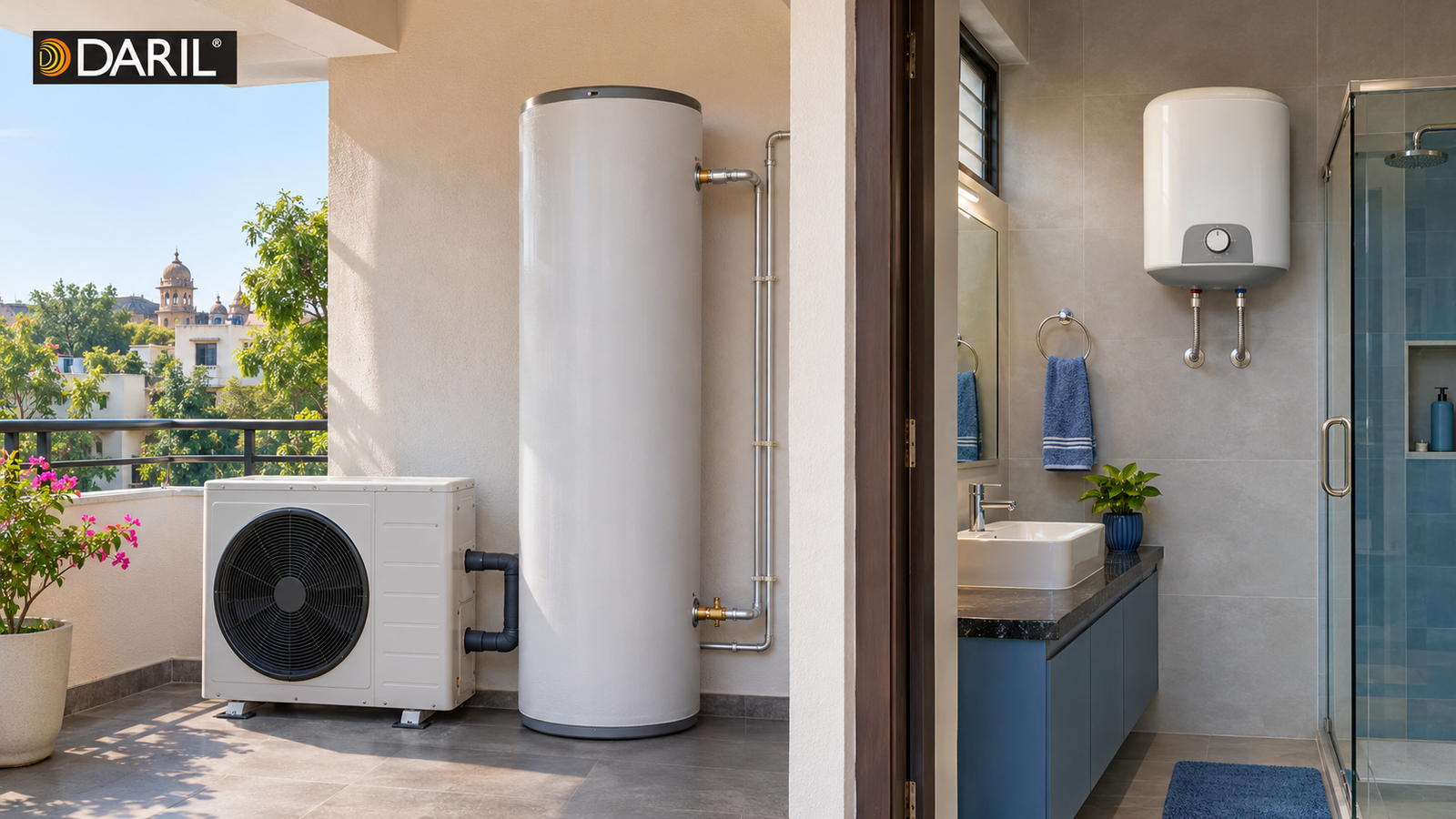
An electric geyser often makes sense for a smaller budget, limited space, or modest hot water use. A heat pump water heater deserves a closer look when a home uses a lot of hot water and has the right space. The better choice depends on total cost and daily demand.
Both systems use electricity. A standard electric geyser turns electricity into heat through an element. A heat pump uses power to move heat from the air into water.
That difference can lower energy use. However, a heat pump often costs more to buy and requires more careful planning.
Before speaking with a heat pump dealer in Vadodara, note how many people need hot water, when they bathe, and where the unit could go. These details help you compare the right models.
This guide mainly compares storage electric geysers with domestic air-source heat pump water heaters. Instant electric models have different flow and power needs.
How Do Heat Pumps and Electric Geysers Work?
How Does an Electric Geyser Heat Water?
A storage geyser uses an electric resistance element inside a tank. A thermostat controls heating, and insulation helps keep the water warm.
When you draw hot water, cold water enters the tank. The element heats that replacement water.
This design is simple and familiar. It still uses energy to replace heat lost through the tank, even when no one draws water.
How Does a Heat Pump Water Heater Work?
A heat pump takes heat from air and transfers it to water through a refrigerant circuit and heat exchanger.
A fan and compressor use power to drive the process.
The U.S. Department of Energy says these systems can be two to three times more efficient than standard electric resistance water heaters. This is broad guidance, rather than a guaranteed result for a model in your home.
Some heat pumps include an electric backup element. Frequent backup use can reduce the expected energy benefit.
What Are the Main Differences?
| Buying factor | Electric storage geyser | Heat pump water heater |
| Heating method | Electric resistance element | Moves heat from air into water |
| Purchase cost | Often lower for small domestic units | Often higher |
| Power needed for the same heat | Usually higher | Can be much lower |
| Space | Compact bathroom models are common | Tank and air unit need the right space |
| Airflow | Does not need heat-source airflow | Needs airflow as specified |
| Noise | No compressor or fan | Fan and compressor produce sound |
| Upkeep | Tank, element, valves, and controls | Tank care plus air and cooling circuit parts |
| Best fit to assess | Low or modest demand | Steady or higher demand |
Compare equipment sized for the same job. A small bathroom geyser and a large central heat pump do not offer equal service.
Why Does Vadodara’s Climate Matter?
A heat pump’s output and energy use change with air temperature and the required water temperature.
Indian building guidance notes that heat pumps work well in warm conditions. They can also run at night and in wet weather when air temperatures suit the equipment.
This makes them worth assessing in Vadodara. However, the city’s climate does not remove the need to check the model’s operating limits.
A sun-exposed enclosure can become very hot. A tight shaft can restrict airflow. A unit near a bedroom may cause noise concerns.
An electric geyser does not extract heat from air. It can offer more placement flexibility, subject to safe mounting, plumbing, and wiring requirements.
How Much Electricity Could Each System Use?
Start with the heat your home needs. Then compare how each system supplies it.
For a heat pump, the coefficient of performance, or COP, means heat delivered divided by power used.
A COP of 3 means three units of heat for one unit of electricity under stated conditions. Check the test conditions before comparing products.
What Does a Simple Cost Example Show?
Assume a home heats 100 litres of water each day from 25°C to 55°C.
That 30°C rise needs about 3.49 kWh of heat, before losses.
| Item | Illustrative value |
| Daily water heated | 100 liters |
| Water temperature rise | 30°C |
| Required heat | About 3.49 kWh |
| Resistance heater power use, before losses | About 3.49 kWh |
| Heat pump power use at COP 3 | About 1.16 kWh |
| Assumed electricity rate | ₹8 per kWh |
| Resistance heating cost per day | About ₹27.92 |
| Heat pump cost per day | About ₹9.31 |
These are calculations, not measured bills or local tariff quotes. They exclude tank losses, pipe losses, backup heating, and other system energy use.
Real results change with water use, weather, settings, and the quality of the setup.
Why Is the Rated Wattage Not Enough?
A 2 kW element uses about 2 kWh when it runs nonstop for an hour. That does not mean it runs for an hour every day.
Likewise, a heat pump’s lower power input doesn’t reflect its full daily use. Runtime matters.
Ask for estimated annual power use based on your demand. Avoid a comparison that only lists input power.
What Does a BEE Star Rating Tell You?
For storage electric water heaters, BEE’s rating framework uses standing loss. This measures energy used to maintain stored hot water under defined test conditions when no water is drawn.
A lower standing loss helps reduce wasted heat.
Check the label period, model details, tank size, and standing loss. Compare like-sized products under the rules that apply to them.
Do not read a five-star label as proof that a resistance geyser uses heat pump technology.
The two measures answer different questions. Standing loss reflects stored heat loss. Heat pump COP describes heat delivered relative to power input at specific conditions.
When Could a Heat Pump Recover Its Higher Cost?
Payback depends on the extra installed cost and the actual annual savings.
Use this simple calculation:
Simple payback = extra installed cost ÷ annual net savings
Suppose the heat pump option costs ₹45,000 more than the geyser setup you would otherwise choose. If it saves ₹7,500 a year after allowing for extra upkeep, simple payback is six years.
Those figures are examples. They are not market prices or a promised return.
Ask for the assumptions behind any payback estimate:
- How much hot water will the home use?
- What electricity rate applies?
- What seasonal results are assumed?
- How often will backup heating run?
- What service costs are included?
If your family uses hot water only during a short winter period, annual savings may be too small to justify a large upgrade.
How Should You Choose the Right Capacity?
Count demand during the busiest period, rather than choosing by bedrooms alone.
Four short bucket baths can create a different load from four long showers. Two bathrooms used at once also change delivery needs.
What Should Geyser Buyers Check?
Check usable stored hot water, heating time, and the gap between baths.
A larger tank may help when several people bathe in a row. Yet it also takes space and stores more water that can lose heat.
If you are comparing electric geyser options, ask how each model would serve your routine.
What Should Heat Pump Buyers Check?
Ask about hot water delivery during peak demand, recovery time, and output in heat pump mode.
Some systems boost output with a resistance element. That can help meet demand, but it affects energy use. ENERGY STAR’s design guidance highlights the link between tank size, peak demand, and backup use.
Do not rely on tank litres alone. The heating output must also suit the schedule.
Should You Choose One Central System or Separate Geysers?
Separate geysers can keep hot water close to each bathroom. This may reduce waiting time and avoid long central pipe runs.
A central heat pump can serve several bathrooms from one system. It needs a well-planned plumbing layout.
Long pipes can waste heat and leave users waiting for hot water. A circulation loop can improve ease of use, but it adds pump energy and heat loss.
An existing home may need plumbing changes that a new build can plan from the start. Include that work in the budget before comparing appliance prices.
What Installation Checks Matter Most?
What Does a Heat Pump Need?
Confirm these points during a site visit:
- Clear air intake and discharge paths.
- The service space stated in the manual.
- A suitable drain for condensate.
- Safe power supply and isolation.
- Strong support for the equipment.
- Acceptable noise near bedrooms and neighbours.
Indoor integrated units and outdoor split systems can have different needs. Follow the actual model’s instructions. Air space and placement can affect how well a heat pump works.
What Does an Electric Geyser Need?
A qualified installer should check wall strength, pipe connections, rated pressure, cable size, earthing, and circuit protection.
During a renovation, review the electrical switches and controls along with the appliance. Have an electrician confirm the full circuit.
How Do Hard Water and Maintenance Affect the Choice?
Neither system removes hardness from water.
Ask for a test of your supply, especially if you see scale on taps or have had tank problems.
Check the brand’s limits for water quality and pressure. Ask how those limits affect warranty coverage.
With a geyser, service may include checks of the element, tank, safety valve, and any sacrificial anode. Water heater guidance also notes that hard water can cause scale problems.
A heat pump also needs checks of airflow, drainage, controls, and the refrigerant circuit.
Ask who handles local repairs and how long key parts may take to arrive. A longer parts warranty does not always cover labour, travel, or water damage.
Which Option Fits Common Vadodara Households?
A Couple in a Small Apartment
A compact storage geyser may meet modest demand at a lower upfront cost.
A heat pump still needs enough savings and the right space to justify the change.
A Large Family With Several Bathrooms
A heat pump deserves a detailed assessment when hot water use stays high.
Confirm peak delivery and pipe layout.
A Home Used Only on Some Weekends
A simple geyser may offer better value when annual use is low.
A Villa Under Construction
Review both options before plumbing and wiring work starts.
Early planning makes it easier to place equipment, shorten pipe runs, and provide service access.
What Safety Checks Should You Never Skip?
Both systems store hot water and may operate under pressure.
Use a trained installer and qualified electrician. Confirm earthing, suitable circuit protection, isolation, and the required pressure relief setup.
Never block a safety valve or its discharge path. Product instructions warn against blocking temperature and pressure relief protection.
Discuss scald protection where children or older adults use the bathrooms.
Follow the brand’s temperature and hygiene guidance. Avoid lowering settings purely to chase savings without checking safe use.
Ask the installer to show you the normal controls, shutdown steps, and signs that need service.
Frequently Asked Questions
Does a Heat Pump Water Heater Use Electricity?
Yes. Power runs the compressor, fan, and controls. Some models also use a resistance backup element. The energy benefit comes from moving heat from air into water, rather than making all the heat directly.
Is a Heat Pump Cheaper to Run Than a Geyser?
It often uses less power for the same heat output. Actual cost depends on the model, backup use, losses, and your tariff. Lower running costs don’t always mean lower total ownership costs for a low-use home.
Can a Heat Pump Replace My Existing Geyser?
Possibly, but it may not be a direct swap. The installer must check space, airflow, plumbing, drainage, and power needs. A small bathroom geyser connection may not suit a central heat pump setup.
Does a Heat Pump Heat Water Faster?
Not always. Compare heating output, recovery time, and starting conditions. A heat pump may recover more slowly in its efficient mode, while backup heating may speed recovery at a higher energy cost.
Can Either System Heat Water During a Power Cut?
Neither normally heats fresh water without power. Previously heated water may remain in an insulated tank. Whether it reaches the tap also depends on water pressure and any pumps your home uses.
Is a Five-Star Geyser as Efficient as a Heat Pump?
The ratings describe different things. A storage geyser’s BEE rating relates to standing heat loss. A heat pump can deliver more heat per unit of power by drawing heat from air. Compare complete product data.
Which Choice Makes Sense for Your Home?
Choose a geyser when modest demand, space, and upfront cost favour a simple setup. Assess a heat pump when steady demand and the right site could support lower running costs.
For a comparison based on your home, contact the showroom with your water use and site details. Daril Lighting Solutions can help explain available specifications while a qualified installer confirms the design, cost, and installation needs.